This website is now archived. To find out what BERG did next, go to www.bergcloud.com.

Blog posts from September 2009

Week 225

Material exploration is the process of getting your hands dirty in order to realise inherent possibilities. Forms for consumer electronics and big, interconnected data are both clays to learn and sculpt. Ashdown is a data heavy project, and Tom is beginning the material exploration now, building systems to ingest data for manipulation and folding, so that – in the design process – we can ask the data what it wants to be, and have that dialogue that happens between material and designer during thinking through making.

That’s Tom’s focus. Matt is focused on a casual game prototype in a two week sprint on another big data project. You have to want to keep clicking, and that’s such an experiential requirement: everything else can be mocked, but this part needs to be designed. Paul Pod is in the studio to work together with Matt on this, and he’s great to have around. (Paul also worked with us on The Incidental.) Matt is our golden boy this week: his recent future cities column at io9 provoked a stellar review from Bruce Sterling. “BERG has become a new Archigram”?? Bruce, that’s terrifically flattering hyperbole, thank you! Now we really have something to live up to.

Jack is prepping the launch materials for the next film to be released (post Nearness). That’s for Tuesday next. He’s working with a mechanical engineer on one project, and will have what we hope is the production-ready Ojito back from the model maker tomorrow. There are a few more costs to figure out before we can make a go/no go. Last week’s workshop we had together with Brian Boyer of Sitra went well, and I’m pleased to see Brian beginning weekly updates for the Helsinki Design Lab.

Me, I’m writing a talk, clarifying points for the accountants, and filling in forms this week, together with the usual progressing of business development. (The pipeline is looking healthy at all stages this week, with all hands taking the lead on a variety of projects.) I’ll be sitting on a panel at the Wired Intelligence Briefing on Thursday, and on Saturday flying to Australia to open Web Directions South and to have a holiday.

A holiday? I’m serious, a holiday.

BERG in this month’s Icon magazine

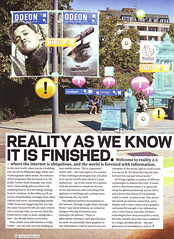
Will Wiles of Icon magazine interviewed me briefly for his article in the current (October) issue, on developments in augmented reality and impacts of architecture and urban design.

It’s a good overview aimed at a non-technical audience, and it’s great to see the discourse about AR in a design magazine rather than the usual more tech-oriented venues.

Also, gratifying to be quoted alongside our friends Eric Rodenbeck from Stamen and Usman Haque from Pachube/Haque Design+Research.

Week 224

The exciting news this week is that terms were agreed on Ashdown. This is a project on the scale of Shownar so will keep us occupied in various ways for at least the next six months. It’s a shame Matt Jones is on holiday this week, as he’s leading it — we’ll have to celebrate once he’s back.

Tom’s broken ground on Ashdown already: the first stage is material exploration, and so there’s data to be ingested and explored by designers.

I had hoped we could coincide Ashdown with another project using similar resources, and take advantage of being able to bring in long-term contractors, but we’re facing the traditional problem: closing deals always takes longer than I think. That’s getting some more of my attention now… how can risk be minimised and the process eased to move toward contract, when there’s investment that needs to be made simultaneously on both sides? I need to learn more about closing, especially in this industry, so any book recommendations or pointers are much appreciated.

That aside, I’m getting pretty confident in the process behind bringing in and balancing client services. Next up is to get as confident about new product development. We’re pretty good at the design process itself – developing briefs and finding the inventive steps – but across many products, there are questions: how much to invest in feasibility; how much should be known at the point of go/no go; how to continue to commercialise ideas. We have limited attention and investable cash, and physical things cost more – in cash terms – than websites, so it can’t be a matter of working late to try out ideas. Schulze made some good suggestions yesterday.

In terms of work: Matt, as I said, is on holiday. Tom has been writing and coding for data exploration on Ashdown. Schulze is split between business development meetings in media design/consultancy (his particular speciality), managing contractors on one product concept, and working on feasibility for two more. He’s in a client workshop with me today. I’ve been chasing invoices and fielding emails this week, and arranging a workshop for next Monday to kick off a two week sprint on a kind of playable demo. There were two talks for me – UX Week last Friday in San Francisco, and a panel at Digital Architecture London on Monday – and that always eats more time than I expect.

As Ashdown gets plugged into regular work, my attention is moving to the next big project to activate, one we call Weminuche.

The City Is A Battlesuit For Surviving The Future

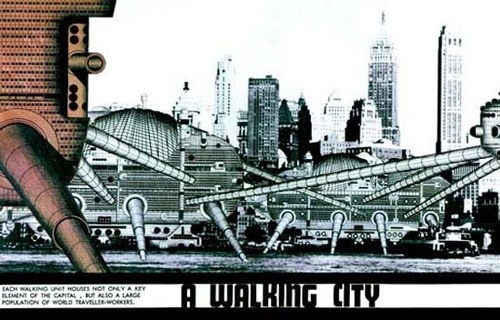
A Walking City

Our colleague Matt Jones has a guest post up at the sci-fi blog io9 (strapline: ‘we come from the future’). He riffs on architecture, stories and comics, sensors, and the urban future. A representative para…

The infrastructures we assemble and carry with us through the city – mobile phones, wireless nodes, computing power, sensor platforms are changing how we interact with it and how it interacts with other places on the planet. After all it was Archigram who said “people are walking architecture.”

Sweet.

Go read his post, The City Is A Battlesuit For Surviving The Future.

My Weekend On Series 40

Taking my iPhone to a music festival didn’t really seem like the most sensible idea: a capacitive touchscreen in a potentially muddy field? A battery that only just lasts a day? It’s not exactly suited to the wilderness, not to mention a little fragile.

At the same time: it’s exactly the place that connectivity comes in handy, for finding lost friends. And so I decided to take a spare. Unfortunately, all my old phones are locked to the wrong network, so it was time to make a trip to a phone shop and buy a cheap pay-as-you-go phone.
2760-closed

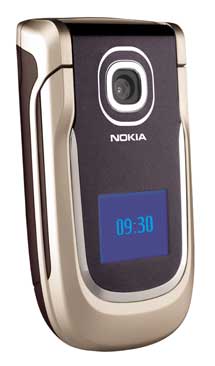
I ended up with the Nokia 2760, otherwise known as the “second cheapest Nokia in the shop”, which seemed like a safe bet. The clamshell form factor was another layer of protection from the elements (when I wasn’t sure what the weather would be like), and perhaps more importantly, meant that the keypad buttons were much larger than on equivalent candybar-shaped devices. That was a distinct advantage given the potential for drunk, clumsy texting when in the vicinity of the Somerset Cider bus.

I spent a weekend away from pervasive connectivity, from GPS, from Twitteriffic, from thousands of apps, and instead just took the state-of-the-art when it comes to really cheap, no-frills phones.

And, you know, it was absolutely fine. The phone does everything you’d expect it to: it makes calls, it sends texts, it has a simple camera, and it has an alarm clock. I still have the muscle memory for Nokia’s T9 implementation. I could have installed Opera Mini on it (far better than the built-in browser) primarily for using Twitter, but really, I wouldn’t mess with it in any other way. And, of course, the hardware is great, as you’d expect from a firm with the industrial design experience of Nokia: it’s pleasant to hold in the hand, and it certainly doesn’t feel cheap. Also, it’s small; smartphones really have made me forget how tiny phones had got at one point, and the 2760 is a reminder that much smaller packages still exist.

Using the Nokia over the long weekend also reminded me that my usage of mobile phones has actually changed very little in the past decade. When it comes to the functionality of a phone, there’s almost no difference between my iPhone and the Nokia: they call, they make texts, they have a few useful features. Most of the change in my use comes down to the “smart” half of the smartphone: all the features that have converged from other devices. I no longer carry an iPod around with me; I no longer need an A to Z on me; I write my to-do lists into Things rather than my notebook; I can get on the web without complicated Bluetooth rituals.

2760-open

But none of it is necessarily unique – or vital – to my experience of the phone-as-mobile-communicator. I enjoyed the practicality and immediacy of the Nokia. I often find the wall of phones you see in shops tiring now – a series of black slabs, all identical in appearance thanks to the ubiquitous touchscreen, all to be distinguished by the software they run (which is usually never demonstrated in shops). The 2760 wears its phone-ness on its sleeve.

The magic of mobile phones is, first and foremost, that they are wireless communicators. You can talk, to other people, anywhere in the world, without wires. Everything else – all the magic in your convergence device – is something else. What phones have become, but perhaps they’ve transcended that description of phone-ness. All that is nice to have, for sure, and I’m very glad to have my iPhone back, but I was not once inconvenienced.

And here’s the big takeaway for me: it was fascinating to realise just how good the low-end products on the mass market today are. It’s easy to talk excitedly about innovation, and the new possibilities brought by every-more-advanced technology. It’s not much harder to be excited by products for emerging and developing markets, finding ingenious ways to bring costs right down and, potentially, change lives that have never experienced new kinds of technology. But it’s a lot harder to be excited the territory that lies between those two: refinement for the mass market of the developed world; products so unashamedly not new, but instead a continuation of past innovation, often doing nothing more than bringing that technology to a wider market at a lower price.

That’s as much part of design as new and shiny, and we don’t talk about it enough. The design community talks a lot about products like the iPod, but never the $20 MP3 players you find in the Sears catalogues. We talk about Chumbys and Pleos, but never the hundreds of items on shelves in Toys R Us right now, that are selling, and played with, and distill (sometimes well, sometimes terribly) so many of the ideas we, as a design community, talk about, into a $30 toy.

We shouldn’t stop talking about the iPods and the Roombas, either, but it’s worth remembering there is a world outside the five or six ubiquitous examples that do the rounds in conference season. And that’s what I learned when I bought a cheap mobile phone to take to a field.
Week 223

I’m sitting in the lobby of the Palace Hotel in San Francisco. In an hour or so I’m keynoting the final day of UX Week. I have a bit of a thing for cheap, black American filter coffee. It has a bitterness and twang and directness that cuts right to the heart of what coffee is about. My paper cup is running low so I’ll keep this quick.

We in the main split the work of the company in half. Matt Jones looks after client services, and Schulze looks after new product development. It’s not clear cut, of course, because we’re small and so much is shared. But I think that general wellbeing, agency, the development of unconscious expertise, and structure without management are rooted in areas of responsibility that belong to individuals, are clearly demarcated and known by the group. It took me a while to come to this – Schulze noticed it first – but I’m a believer in roles now.

Having said there’s often cross-over, there was hardly any this week. Matt was at early and late stage business development presentations and meetings. He’s writing too. Schulze was working on feasibility pricing for two products, one of which at least I’d like to have on the market for Christmas, and moving another product forward. A couple weeks ago, I began tracking the movement towards revenue of both client services and NPD side by side, on a pipeline diagram stuck to the wall behind my desk. When the pipeline is showing progress at all stages, on both sides, it makes me happy, like a plumber who isn’t needed today.

Otherwise… Tom has been on holiday, and I’ve finally jumped through the last logistical hoops for Ashdown. We’ll sign the contract for that on Monday.

I’ve left the big news till last. Schulze has been working with Timo Arnall of Touch/AHO, and this week they released Nearness, a chain reaction film short using RFID, touching without touching.

The reaction has been tremendous. Timo brought together some responses yesterday. The video is already at 67,000 views. I’m proud we’ve been part of some beautiful and, yes, popular work. Congratulations Schulze and Timo!

Nearness

Last week Timo and I finished filming and editing Nearness. Earlier in the year BERG was commissioned by AHO/Touch to produce a series of explorations into designerly applications for RFID (more to come on what that means). Over the coming weeks BERG will be sharing the results of the work here and on the Touch blog.

The film Nearness explores interacting without touching. With RFID it’s proximity that matters, and actual contact isn’t necessary. Much of Timo’s work in the Touch project addresses the fictions and speculations in the technology. Here we play with the problems of invisibility and the magic of being close.

The work refers fondly to the Fischli and Weiss The Way Things Go film and its controversial offspring The Honda ‘Cog’ commercial. There are of course any number of awesome feats of domestic engineering on YouTube. Japanese culture has taken the form to its heart. My favourite examples are the bumpers in the kids science show Pythagora Switch. Here’s a clip.

Our twist is that the paired objects do not hit or knock, they touch without touching.

Matt Jones at Design by Fire conference, October 20th, Utrecht

I’m really looking forward to heading to Utrecht in October to participate in the 2009 Design by Fire conference, as apart of what looks like a fine programme ranging from the very practical to, well, me.

Here’s the pitch for my talk from the site:

Closing keynote: “We have all the time in the world”

People, places, time. The triumvirate of factors at play in mobile, social, locative services might be familiar at the surface level to designers and developers.

Our relationships to each other, the cities and places we inhabit and navigate have been transformed in the last few years by the technology, products and services that we have designed — but what about that last one of the three — time?

Using examples from the development of Dopplr.com and other services — alongside historical and science-fictional perspectives — Matt will explore what we might call “neochronometry” and illustrate some directions we could take as interaction designers to treat time as a material.

Hope to see you there!

Hello, Ojito!

Hello, Ojito!
Ojito is the name of a new 3d viewing toy we’re making. We took the first prototypes to FooCamp recently, and it got a great reception – but more importantly we got great feedback. Thanks to all!

We’ll be talking more about Ojito in the extremely-near-future, but for now here’s the logo and our mascot for the project. As Matt Webb found out on our trip, “Ojito” means “Little Eye” in Portuguese, which inspired me to create this little fella.

Hello, Ojito!

Be selective with your innovation, and other wisdom from GameLayers

Our friends at GameLayers recently took the hard decision to retire their launch product, PMOG, and dedicate their efforts to a new game, Dictator Wars (on Facebook), where they can spend more time on game design and less on the supporting infrastructure. They have many enthusiastic players already. Good on them!

I’m always impressed with good, hard decisions. If you’ve ever had a sleepless night over a project, you can imagine how tough it must be to, a year or even more later, walk away from it. Projects are tangled thickets of history and emotion. Corner turns are hard, and killing your babies doubly so. GameLayers have displayed good strategy.

Justin’s post on their learnings is insightful and leaves me yet more impressed. He shares three thoughts as to what makes a good product in interactive media. It’s much more widely applicable. I’ve picked a sentence from each:

  • Be selective with your innovation. Keep as much of your product predictable, so people can find their way to the gem of awesome that you have pioneered.
  • Serious Business. … if you want to actually hire people to work with you, pay kickass artists to make content for your game, and afford to buy new shoes, figure out what people would want to pay for if they were using your software.
  • First Five Minutes. If someone can’t figure out what to do in the first five minutes of your interactive experience, you are hosed.

All so true! There’s more. Go read it.

Recent Posts

Popular Tags