This website is now archived. To find out what BERG did next, go to www.bergcloud.com.

Blog posts from September 2010

Ludichocolate

I’m very enamoured of Cadbury’s “Spots Vs Stripes” chocolate bars.

Spots Vs Stripes

There’s all sorts of adverts around London, covering every bus-stop, little loops on urban-screens, giving them a big push – and a fancy website full of the latest social-casual-game-flash-o-rama. But, the purity and brilliance of the chocolate bar itself is what really stands out.

You unwrap it (carefully… this was a bit of a point-of-failure with my first one…) and you discover three chunks of chocolate: one with spots on it, one with stripes on – and one labelled ‘winner’.

Spots Vs Stripes

Inside the wrapper is a challenge – to share with a friend – each of you adopting the side of spots or stripes. The winner, naturally gets the ‘winner’ chunk at the end.

Brilliant.

To see play and small-group-sharing designed into something everyday like this is inspirational. Amusingly, Cadburys appear to have been awarded the role of ‘Official Treat Provider’ by the London 2010 Olympics.

Spots Vs Stripes

The treat of Spots Vs Stripes is the play it affords, as much as the chocolate…

B.A.S.A.A.P.

Design principle #1

The above is a post-it note, which as I recall is from a workshop at IDEO Palo Alto I attended while I was at Nokia.

And, as I recall, it was probably either Charlie Schick or Charles Warren who scribbled this down and stuck it on the wall as I was talking about what was a recurring theme for me back then.

Recently I’ve been thinking about it again.

B.A.S.A.A.P. is short for Be As Smart As A Puppy, which is my short-hand for a bunch of things I’ve been thinking about… Ooh… Since 2002 or so I think, and a conversation in a california car-park with Matt Webb.

It was my term for a bunch of things that encompass some 3rd rail issues for UI designers like proactive personalisation and interaction, examined in the work of Byron and Nass, exemplified by (and forever-after-vilified-as) Microsoft’s Bob and Clippy (RIP). A bunch of things about bots and daemons, conversational interface.

And lately, a bunch of things about machine learning – and for want of a better term, consumer-grade artificial intelligence.

BASAAP is my way of thinking about avoiding the ‘uncanny valley‘ in such things.

Making smart things that don’t try to be too smart and fail, and indeed, by design, make endearing failures in their attempts to learn and improve. Like puppies.

Cut forward a few years.

At Dopplr, Tom Insam and Matt B. used to astonish me with links and chat about where the leading-edge of hackable, commonly-employable machine learning was heading.

Startups like songkick and last.fm amongst others were full of smart cookies making use of machine learning, data-mining and a bunch of other techniques I’m not smart enough to remember (let-alone reference), to create reactive, anticipatory systems from large amounts of data in a certain domain.

Now, machine-learning is superhot.

The web has become a web-of-data, data-mining technology is becoming a common component of services, and processing power on tap in the cloud means that experimentation is cheap. The amount of data available makes things possible that were impossible a few years ago.

I was chatting with Matt B. again this weekend about writing this post, and he told me that the algorithms involved are old. It’s just that the data and the processing power is there now to actually get to results. Google’s Peter Norvig has been quoted as saying “All models are wrong, and increasingly you can succeed without them.“.

Things like Hunch are making an impression in the mainstream. Google Priority Inbox, launched recently, make the utility of such approaches clear.

BASAAP services are here.

BASAAP things are on the horizon.

As Mike Kuniavsky has pointed out – we are past the point of “Peak Mhz”:

driving ubiquitous computing, as their chips become more efficient, smaller and cheaper, thus making them increasingly easier to include into everyday objects.

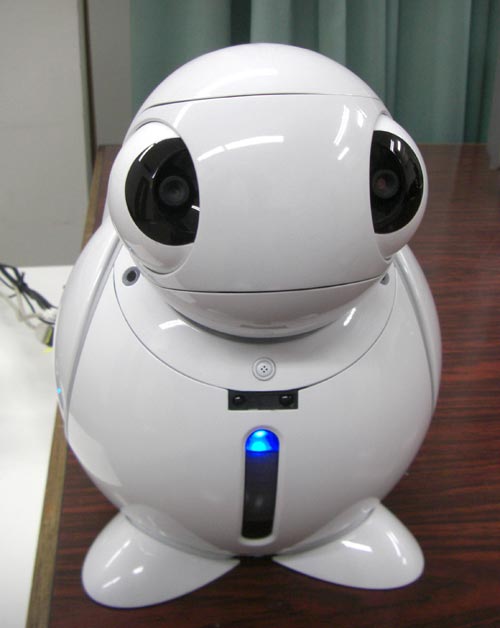
This is ApriPoco by Toshiba. It’s a household robot.

It works by picking up signals from standard remote controls and asks you what you are doing, to which you are supposed to reply in a clear voice. Eventually it will know how to turn on your television, switch to a specific channel, or play a DVD simply by being told. This system solves the problem that conventional speech recognition technology has with some accents or words, since it is trained by each individual user. It can send signals from IR transmitters in its arms, and has cameras in its head with which it can identify specific users.

Not perhaps the most pressing need that you have in your house, but interesting none-the-less.

Imagine this not as a device, but as an actor in your home.

The face-recognition is particularly interesting.

My £100 camera has a ‘smile-detection’ mode, which is becoming common. It can also recognise more faces that a 6-month old human child. Imagine this then, mixed with ApriPoco, registering and remembering smiles and laughter.

Go further, plug it into the internet. Into big data.

As Tom suggested on our studio mailing list: recognising background chatter of people not paying attention. Plugged into something like Shownar, constantly updating the data of what people are paying attention to, and feeding back suggestions of surprising and interesting things to watch.

Imagine a household of hunchbots.

Each of them working across a little domain within your home. Each building up tiny caches of emotional intelligence about you, cross-referencing them with machine learning across big data from the internet. They would make small choices autonomously around you, for you, with you – and do it well. Surprisingly well. Endearingly well.

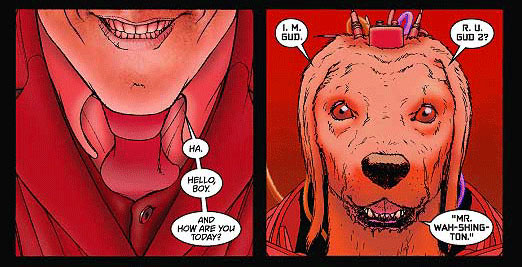
They would be as smart as puppies.

Hunch-Puppies…?

Ahem.

Of course, there’s the other side of domesticated intelligences.

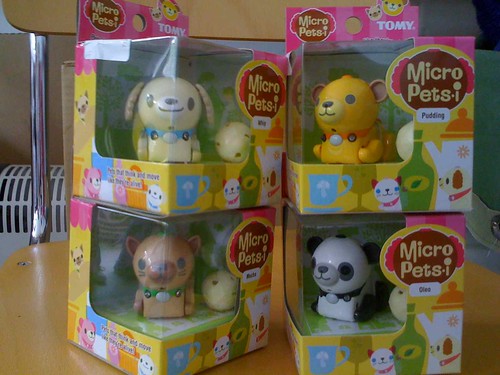
Matt W.’s been tracking the bleed of AI into the Argos catalogue, particularly the toy pages for some time.

They do their little swarming thing and have these incredibly obscure interactions

The above photo of toys from Argos he took was given the title: “They do their little swarming thing and have these incredibly obscure interactions”

That might be part of the near-future: being surrounded by things that are helping us, that we struggle to build a model of how they are doing it in our minds. That we can’t directly map to our own behaviour. A demon-haunted world. This is not so far from most people’s experience of computers (and we’re back to Byron and Nass) but we’re talking about things that change their behaviour based on their environment and their interactions with us, and that have a certain mobility and agency in our world.

I’m reminded of the work of Rodney Brooks and the BEAM approach to robotics, although hopefully more AIBO than Runaways.

Again, staying on the puppy side of the uncanny valley is a design strategy here – as is the guidance within Adam Greenfield’s “Everyware”: how to think of design for ubiquitous systems that behave as sensing, learning actors in contexts beyond the screen.

Adam’s book is written as a series of theses (to be nailed to the door of a corporation or two?), and thinking of his “Thesis #37″ in connection with BASAAP intelligences in the home of the near-future amuses me in this context:

“Everyday life presents designers of everyware with a particularly difficult case because so very much about it is tacit, unspoken, or defined with insufficient precision.”

This cuts both ways in a near-future world of domesticated intelligences, and that might be no bad thing. Think of the intuitions and patterns – the state machine – your pets build up of you, and vice-versa. You don’t understand pets as tools, even if they perform ‘job-like’ roles. They don’t really know what we are.

We’ll never really understand what we look like from the other side of the Uncanny Valley.

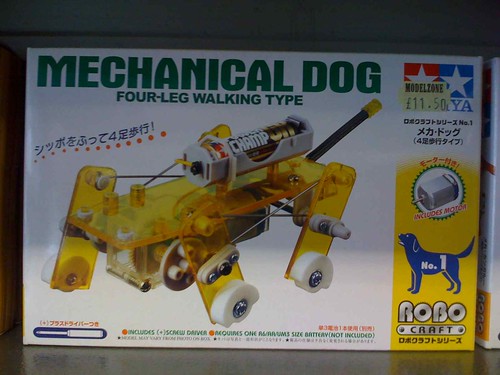
Mechanical Dog Four-Leg Walking Type

What is this going to feel like?

Non-human actors in our home, that we’ve selected personally and culturally. Designed and constructed but not finished. Learning and bonding. That intelligence can look as alien as staring into the eye of a bird (ever done that? Brrr.) or as warm as looking into the face of a puppy. New nature.

What is that going to feel like?

We’ll know very soon.

Patina

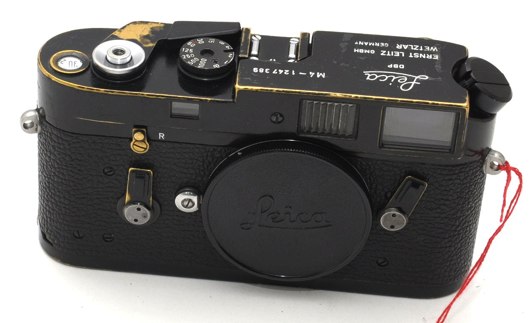
leicam4.jpg

I saw this picture via The Online Photographer a few days ago. It’s a Leica M4, being sold second-hand right now on eBay, for the premium prices such cameras command.

I loved the wear at the edges, where the black paint has been worn away to reveal the brass underneath. It’s not broken; it hasn’t been mistreated. It’s just been well-used in its 35-year-odd lifespan.

And, in some ways, it’s more attractive for its wear. This isn’t a camera that’s been locked away in its packaging by an over-protective collector; it’s been well-used for its intended purpose. Part of the attraction to such an object isn’t just the aesthetic quality of its patina: there’s also something attractive about the action that wear represents. As a photographer, I’m attracted to this wear because in some ways, it represents the act of photography.

I’m not sure I’m explaining this well. Here’s another example.
prayer-feet.jpg

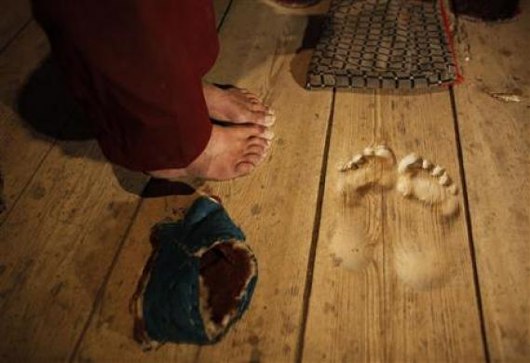
I was looking through my links for other articles about wear and patina, and I found this Reuters photograph from last year. It’s of the floor of a Tibetan monastery, where, over twenty years of daily prayer, Hua Chi has worn his own footprints into the floor.

He has knelt in prayer so many times that his footprints remain deeply, perfectly ingrained on the temple’s wooden floor.

Every day before sunrise, he arrives at the temple steps, places his feet in his footprints and bends down to pray a few thousand times before walking around the temple.

The footprints are three centimeters (1.2 inches) deep where the balls of his feet have pressed into the wood.

1.2 inches of prayer. There’s something beautiful about the smooth imprints of a human foot worn into wood. But the wear itself also comes to symbolise the action that led to it: in this case, Hua Chi’s prayers.

Patina is the effect of actions made solid; photography into worn paint, prayer into a worn floor. It is verbing turned into a noun.

Shared Lives

Nouns and verbs. That reminded me of this post about “The Life Of Products” by Matt W, from nearly four years ago. Matt wrote:

Products are not nouns but verbs. A product designed as a noun will sit passively in a home, an office, or pocket. It will likely have a focus on aesthetics, and a list of functions clearly bulleted in the manual… but that’s it.

Products can be verbs instead, things which are happening, that we live alongside. We cross paths with our products when we first spy them across a crowded shop floor, or unbox them, or show a friend how to do something with them. We inhabit our world of activities and social groups together… a product designed with this in mind can look very different.

Wear is, of course, both a noun and a verb. It’s the verb that inevitably happens through use, and it’s the noun that the verb leaves behind. Patina is the history of a product written into its skin.

And, of course, it takes time for wear to occur. Objects start their lives pure, unworn, ready to be both used and shaped by that use. In Products are People Too, Matt’s 2007 talk from Reboot 9, he said:

Products exist over time. We meet them, we hang out with them, we live life together.

Patina is a sign of a life shared.
tarnished-laptop.jpg

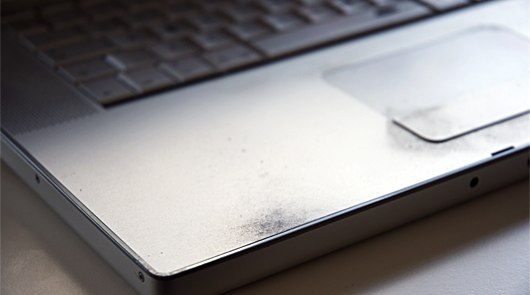
Here’s a life I’ve shared.

This is my three-and-a-half year old laptop. It’s my second aluminium Mac, and, just as with my previous laptop, the surface has tarnished right underneath where my palms rest. It’s not a fault – that black speckling is just what happens when perispiration meets aluminum. It’s not as beautiful as the Leica, or the monastery floor – but it’s not as ugly as cracked and chipped plastic.

I think that might be one reason I’ve kept it quite so long: the material and form of the exterior have encouraged me to hold onto the laptop. Certainly much longer than if it had been poorly constructed, becoming damaged rather than worn.

In his talk at Frontiers of Interaction in 2009, Matt J showed this photograph of Howies’ “Hand-Me-Down jacket”.

It’s a jacket that’s designed to last. Howies ensure they have the materials to repair it, encouraging the owner to mend the jacket rather than throw it out. Inside the jacket is the label above: name tags to last several generations, indicating periods of ownership.

The label is surprising because it serves as a reminder that the product will last. The encouragement to pass something on, and to measure ownership in years, acts as a reminder that there’s no reason to throw the jacket out.

It seems absurd to have to be reminded of that.

But: how many essentially functional pieces of clothing have you or I thrown out? How many items that could be repaired have ended up in the bin? How many objects have never had the time to acquire a patina – thrown out before their time was truly up?

It’s sad that we have to be reminded that objects can last. I cannot deny that there’s a role for inexpensive, cheaply-manufactured, and somewhat disposable products – but they shouldn’t condition us into thinking that’s how all products are.

Designing things that want to be kept

I read an article – which, alas, I can’t find a link to at the moment – about the disposal and lifespan of mobile phones in the USA. The most shocking item in it was that, when questioned as to the lifespan of a mobile phone, most Americans responded with “about 24 months”. A mobile phone may not last like a Leica or a Stradivarius… but it’ll last a good bit longer than two years before it’s beyond use.

24 months was, of course, the length of common cellphone contracts. And so, as contracts expired, and network providers told their customers they were eligible for a new phone, they began to assume there had to be something wrong with the old phone. And it would go in the bin.

When the patina an object gains is attractive, it acts as an encouragement to keep it. Good jeans really come into their own as they wear down and develop creases, rips, rough patches. It’s why my favourite pair say something along the lines of “wash me as little as possible!” inside.

It’s important to note: the wear I’m discussing isn’t related to things breaking. Things break because they’re worn out, or poorly designed, or used inappropriately. Patina is that wear which comes from entirely “correct” usage of a product. That usage might be intense – a professional guitarist’s instrument will acquire patina far faster than mine will – but it is, nontheless, the intended usage of the object.

I’m not sure patina can be designed. After all, it’s a product of the relationship between product and owner.

The form it takes can be shaped – by the materials used in a product, by the nature and frequency of operations that an owner might perform. I suppose that a product can be designed to age gracefully, to wear attractively; it’s just the exact nature of that wear that’s out of a designer’s hands.

In considering the patina a product might develop, you of course have to ask a series of interesting questions: about longevity, about sustainability, about materials, about manufacturing. Going beyond “peak X” and towards “resilient X”, as Matt J said. But I think the most interesting questions – at the very heart of that consideration – are emotional ones. “What if someone adores your product? What if someone really does want to make a product a part of their life? What will your product look like when it’s been worn into the ground by virtue of its own success?

I don’t think there are single answers to those questions, but they’re great questions to have to consider.

(One answer, which leaps to mind for me, can be found in The Velveteen Rabbit – one of those children’s books that manages to be, of course, both profoundly sad and yet uplifting with it. The toy rabbit in question discovers that if his owner loves him enough, he becomes real. Products are people, too, right there in 1920s children’s books).
jim-marshall-m4.jpg

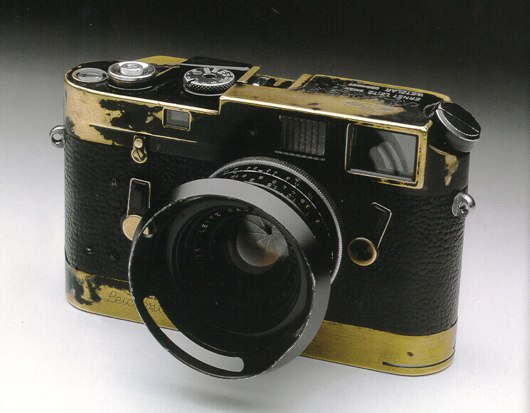
Another Leica M4 to end with: this one belonging to the photographer Jim Marshall, noted for his music photography since the 60s. (If you don’t know the name, you’ll almost certainly know his work).

Marshall made so many striking images with this camera and others like it, and, in that making, gave it its unique patina. It’s a camera as rock’n’roll as the subjects it shot. Somewhere in that wear – buried in the scuff-marks, the scratches, the flaked paint – are Jimi Hendrix, John Coltrane, Johnny Cash at Folsom Prison: the “life lived together” of Marshall and his camera.

Are you an iOS developer in London?

There’s no particular project quite yet, but we’re talking with a number of people about iPhone and iPad work. More than we can handle with our usual crew if it all comes in.

So I want to expand our iOS developers network!

If you develop for iPhone or iPad, and would be interested in working with BERG on short or longer contracts, please do get in touch to introduce yourself, and we’ll keep your details on file. London-or-nearby folks only… we’re a tight-knit studio, and we really like it when people working together are sitting in the same room.

Email Nick at nl at berglondon dot com and please include your CV, a list of apps in the App Store and what you did on them (bonus points if you were the sole developer), and the name of the coolest app installed on your iPhone. (My current favourites are calvetica and Little Uzu.)

And we’ll keep you in mind whenever something comes up!

Recruiters: we’re happy to hear from you, but please ensure your candidates would be cool with contract work, and that you include their answers to the extra questions above. Thanks.

Matt Webb speaking at Mobile Monday Amsterdam, September 6th

Last one of the parish notices. Matt Webb will be in Amsterdam alongside our good friend and occasional colleague Timo Arnall, and longstanding friend-of-BERG Tom Hume – giving a talk on design to the Mobile Monday event next Monday, 6th September.

Matt Brown speaking at HD-Live, Hull, November 4th

Matt B. will be giving a talk about his work at BERG and beyond (and maybe even taking some sock puppets) at HD-Live in Hull, alongside Ben Hammersley and Brendan Dawes amongst others. Here’s the event on Lanyrd.

Matt Jones speaking at Barcelona Design Week, October 21st, Barcelona

I’ll be at the Mobile Design Congress event as part of Barcelona Design Week.

The theme is “Designing for the Networked City” and I’m excited that I’ll be there with two of my favourite geniuses Usman Haque (again!) and Kevin Slavin. Really looking forward to this – thanks to Rudy De Waele for the invite.

Matt Jones speaking at PSFK Conference, September 10th, London

Time to list a few upcoming talks various members of the studio will be giving… Firstly, I’ll be giving a short talk alongside Usman Haque, Dan Hon and others on September 10th, at the PSFK London Conference.

I’m not entirely sure what I’m going to say yet, but I think it will include some nice videos, some dodgy microbiological metaphors and some thinking about product…

This also gives me a chance to plug Natalie Downe and Simon Willison‘s new service, a social-network for compulsive conference goers called lanyrd.com

Recent Posts

Popular Tags