This website is now archived. To find out what BERG did next, go to www.bergcloud.com.

Blog posts from June 2010

Clearing out the link-bucket: generative text, magic tables, Moscow subway map

Nick found this lovely work from Karsten “Toxi” Schmidt: a cover for Print magazine. The final piece of work – a 3D print-out of generated text – is lovely; just as beautiful, however, are all the steps in the process, “growing” type through reaction diffusion. The video above is one such illustration, but the whole write-up is fascinating, and definitely worth your time.

Matt J’s post a few days ago about ‘magic tables reminded me of a recent post by Jason McIntosh over at The Gameshelf, comparing the iPad to cocktail arcade cabinets. You know: those cabinets with the screen in the table, designed to be sat around, a part of a conversation rather than a focused activity. Like the in picture above. McIntosh makes some strong points, most notably:

Thinking about what defines a particular game medium, one doesn’t always consider elements like the player’s physical posture, and where they sit relative to their fellow players. But the experience of playing a digital game with a friend on the iPad proves quite different than that of sitting side-by-side on a couch with Xbox controllers in hand, or sitting alone with a mic strapped to your head. Your sense of posture and presence is part of the game’s medium, as much as the material of the game’s manufacture.

Presence as part of a medium – fantastic.

I enjoyed this gigantic, Lego-Mindstorms-powered chess set. Not as much for the technological “wow” factor as the little details: the Knights’ legs pawing at the air as they move, and, best of all, the way the pieces politely get out of each others’ way as they move about. Machines embody politeness in a most curious way.
moscow-metro.jpg

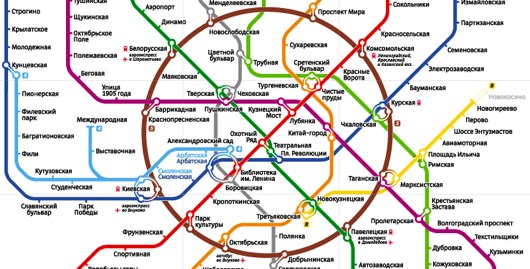
Art Lebedev have redesigned the Moscow Metro map. Never an easy task, subway mapping, but the result is striking. I’m not sure how much better or worse it is than the previous map: I’m not a Moscow local. But it’s clear from the fascinating “process” page just how much care and attention went into the design. The inner ring is clearly iconic, but their more eccentric representations are perhaps the most interesting – the topographic versions in particular.
nyc-compass-rose.jpg

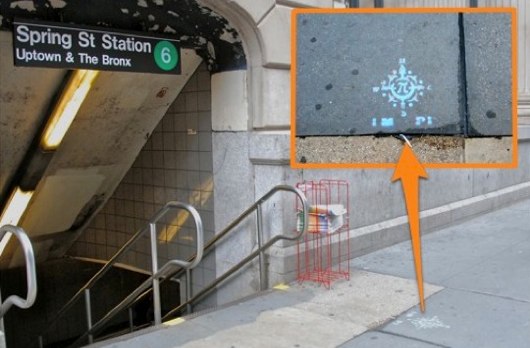
And, finally, how’s this for proper augmented-reality: NYC The Blog report that stencilled compass roses are appearing spray-painted outside subway exists, to help travellers’ get their bearings. Brilliant, and not a screen held at head-height in sight.

Magic tables, not magic windows

A while back, in 2007, I wrote about ‘a lost future’ of touch technology, and the rise of a world full of mobile glowing attention-wells.

“…it’s likely that we’re locked into pursuing very conscious, very gorgeous, deliberate touch interfaces – touch-as-manipulate-objects-on-screen rather than touch-as-manipulate-objects-in-the-world for now.”

It does look very much like we’re living in that world now – where our focus is elsewhere than our immediate surroundings – mainly residing through our fingers, in our tiny, beautiful screens.

Andrew Blum writes about this, amongst other things, in his excellent piece “Local Cities, Global Problems: Jane Jacobs in an Age of Global Change”:

Like a lot of things here, they are deeply connected to other places. Their attention is divided. And, by extension, so is ours. While this feeling is common to all cities over time, cell phones bring the tangible immediacy of the faraway to the street. Helped along by media and the global logistics networks that define our material lives, our moment-to-moment experience of the local has become increasingly global.

Recently, of course, our glowing attention wells have become larger.

We’ve been designing, developing, using and living with iPads in the studio for a while now, and undoubtedly they are fine products despite their drawbacks – but it wasn’t until our friend Tom Coates introduced me to a game called Marble Mixer that I thought they were anything other than the inevitable scaling of an internet-connected screen, and the much-mooted emergence of a tablet form-factor.

It led me to think they might be much more disruptive as magic tables than magic windows.

Marble Mixer is a simple game, well-executed. Where it sings is when you invite friends to play with you.

Each of you occupy a corner of the device, and attempts to flick marbles into the goal-mouth against the clock – dislodging the other’s marbles.

Beautiful. Simple. But also – amazing and transformative!

We’re all playing with a magic surface!

When we’re not concentrating on our marbles, we’re looking each other in the eye – chuckling, tutting and cursing our aim – and each other.

There’s no screen between us, there’s a magic table making us laugh. It’s probably my favourite app to show off the iPad – including the ones we’ve designed!

It shows that the iPad can be a media surface to share, rather than a proscenium to consume through alone.

Russell Davies pointed this out back in February (before we’d even touched one) saying:

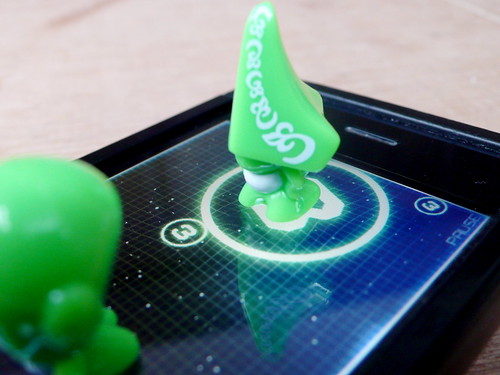
[GoGos]’d be the perfect counters for a board game that uses the iPad as the board. They’d look gorgeous sitting on there. We’d need to work out how to make the iPad think they were fingers – maybe some sort of electrostatic sausage skin – and to remember which was which.

gogos on an iphone

Inspired by Marble Mixer, and Russell’s writings – I decided to do a spot of rapid prototyping of a ‘peripheral’ for magic table games that calls out the shared-surface…

Magic table games

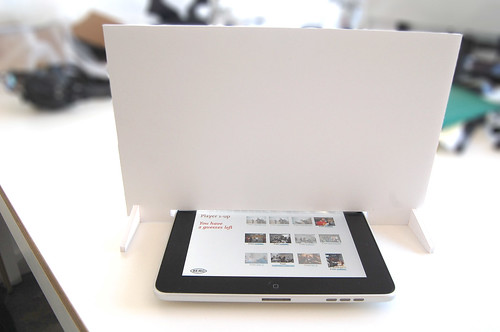
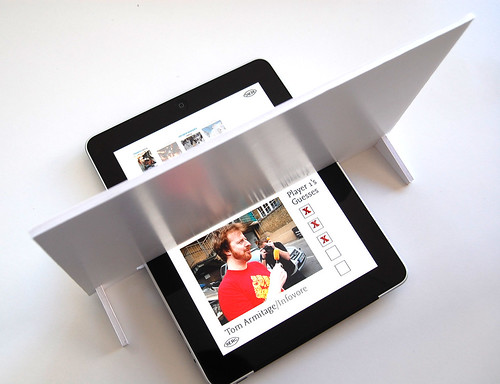
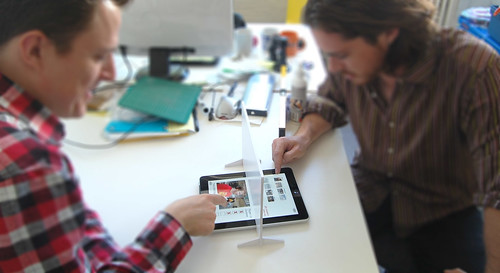
It’s a screen – but not a glowing one! Just a simple bit of foamboard cut so it obscures your fellow player’s share of the game board, for games like Battleships, or in this case – a mocked-up guessing-game based on your flickr contacts…

Magic table games

You’d have a few guesses to narrow it down… Are they male, do they have a beard etc…

Magic table games

Fun for all the family!

Anyway – as you can see – this is not so serious a prototype, but I can imagine some form of capactive treatment to the bottom edge of the screen, perhaps varying the amount of secret territory each player revealed to each other, or capacitive counters as Russell suggests.

Aside from games though – the pattern of a portable shared media surface is surely worth pursuing.

As Paul Dourish put it in his book “Where the action is” – the goal would be

“interacting in the world, participating in it and acting through it, in the absorbed and unreflective manner of normal experience.”

Designing media and services for “little-ass” rather than “big-ass” magic tables might propel us into a future not so removed from the one I thought we might have lost…

Schooloscope: June Release

schooloscope-postcodes.jpg

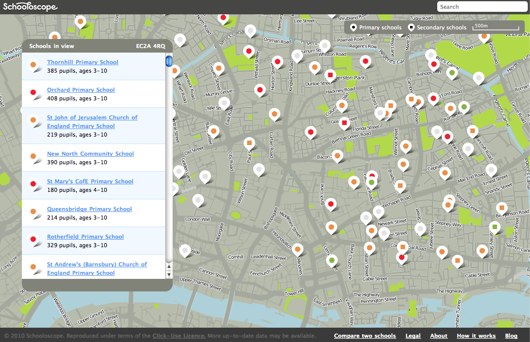
We’ve just rolled out a new version of Schooloscope. The June releases contains both minor fixes and major new functionality. You can find more about what’s new for June over at the Schooloscope blog.

Week 261: Timo’s in the Studio…

09 June, 13.00
…wrangling photons as only he can.

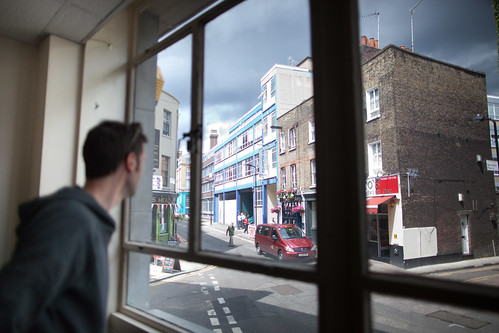
This photo he took of Schulze is looking out the studio window down Scrutton St.

The strange, stormy light, the jumbled-geometry of our neighbourhood and the lens combine.

Lovely – and reminds me somehow of an old BERG favourite – David Hockney on perspective and perception…

Friday Links: Lego Printer, Phonetikana, Napkin Maps

It’s a hot afternoon in the studio, and the weekend is just around the corner; time to wrap up the week with a selection of links from around the studio.

So good it appeared on the studio mailing list twice: a printer made out of Lego and a felt pen. Jack really liked the little workmen all over it: working hard to make your document.

bing-destination-maps.jpg

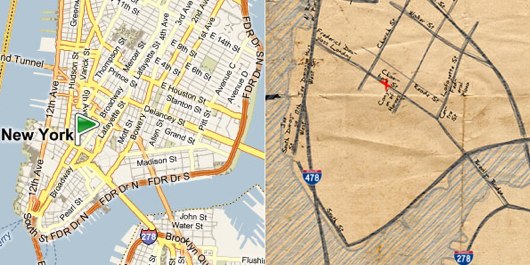
From the Information Aesthetics blog comes news of Bing’s Destination Maps. Automatic rendering of sketchy, vague maps – almost pirate maps – based on an address and an area to focus on. The end results are entertaiing, but also surprisingly useful: reducing the complexity of traditional digital maps down to the level most people require.

pan-am-guides.jpg

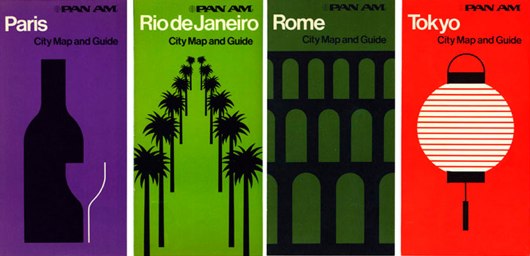
Some lovely graphic design linked over on Monoscope: these beautiful covers of Pan Am City Guides, designed by George Tscherny in the 1970s.

sci-am.png

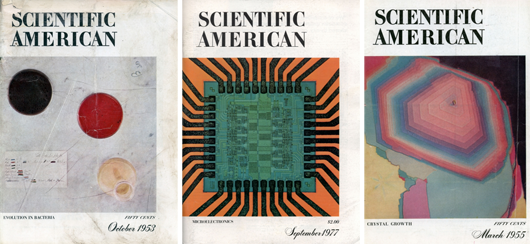
From the esoteric But Does It Float, a series of beautiful old Scientific American covers.

uniqlo-phonetikana.jpg

Via Phil Gyford comes Johnson Banks’ Phonetikana: a typeface that adds pronunciation guidelines into the strokes of katakana, helping make the phonetic script more approachable to foreigners.

dutch-shirts.jpg

And finally, with the World Cup soon upon us, something football related. James Governor sent us a link to these lovely shirts for the Dutch football supporters organisation. The picture explains everything; delightful.

And that’s a wrap. Matt J’s got S Express on the stereo, which it’s probably time to head out into the glorious evening outside and get the weekend started. Have a good one!

Week 260

Project update time.

Client work. Trumbull (a little project with the BBC) is heading towards prototype. The production tools on the back-end of Mag+ are about to have a significant improvement, and the app is soon to have its next feature release — after a particularly tough development cycle. Schooloscope is a week or so away from its next feature release.

Internal work. Availabot is physically and electronically coming together. My mind is turning to software and to fulfilment. Weminuche has slowed due to sourcing delays. It needs to get to end-to-end demo before we proceed.

Opportunities. We had to turn one big possibility down. But July is pretty clear for us concentrate on a particular other (I’m sketching system diagrams to prep). My mind is on what client work we have in for August — we’re at only about one half capacity for that month so far.

I’m enjoying my personal less hectic pace. On my desk at the moment I have the old El Morro project proposal, written overnight on January 28th, and I realise that basically, since that evening, I’ve barely seen friends and colleagues, barely replied to email, and not had time to sit and consider at all. Time to re-connect with the community, and to do a bit of thinking.

Recent Posts

Popular Tags